
Phyllome's facilities combine robotics, artificial intelligence, and closed-loop fertigation to grow premium produce in a fully controlled environment. We enable clean, sustainable, and efficient production with no soil, no pesticides, and no weather dependency.
Powered by Phyllome AI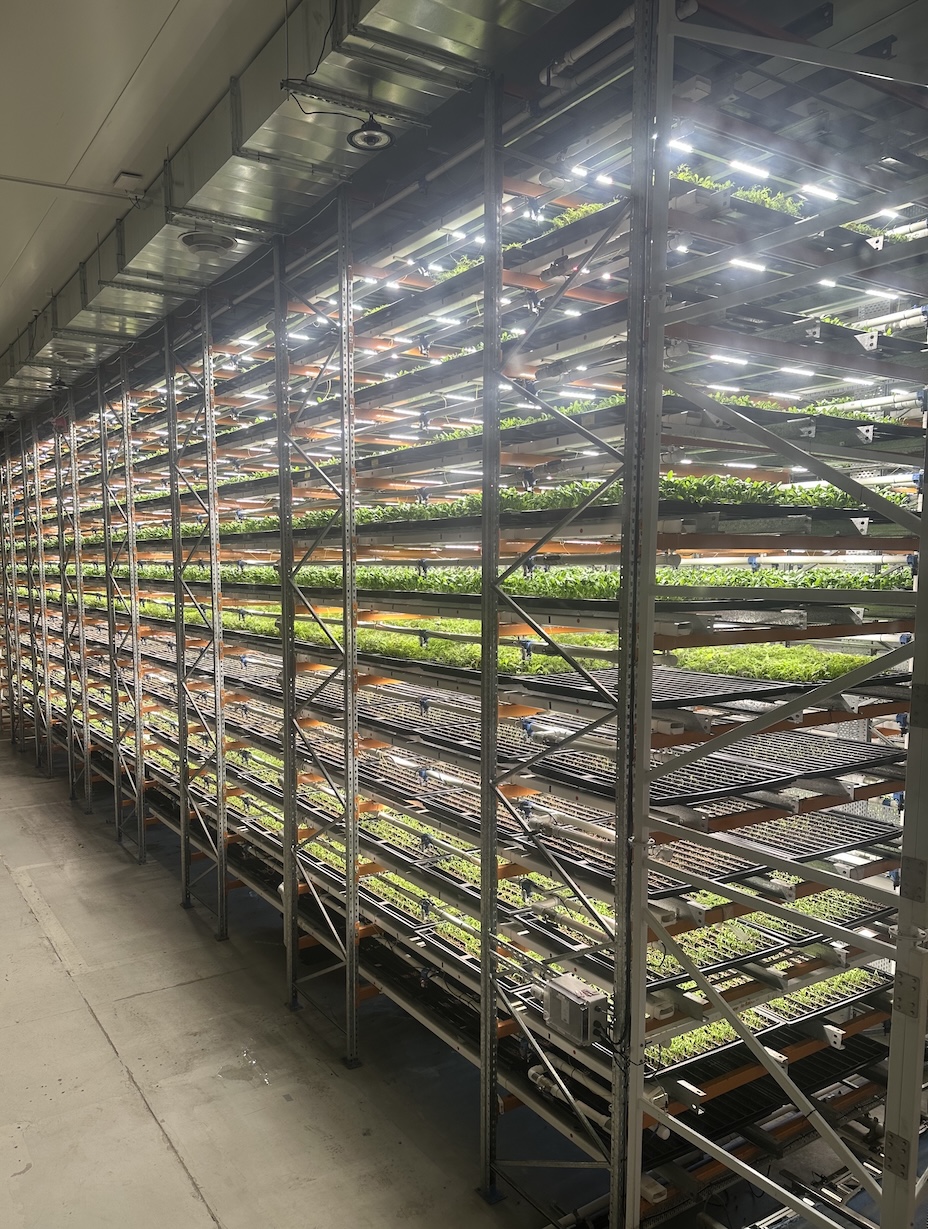
The platform
Phyllome's facilities are purpose-built autonomous controlled-environment agriculture systems. Every variable that affects plant growth including light spectrum, intensity, photoperiod, temperature, humidity, airflow, CO₂, and nutrient delivery, is measured, controlled, and optimised continuously. The result is an agricultural process with the precision and repeatability of advanced manufacturing, applied to growing fresh food.
The facilities operate as sealed clean rooms. There is no soil, no exposure to external weather, pests, or contaminants. This eliminates the need for pesticides, herbicides, and fungicides entirely. Produce is grown from seed to harvest in a completely enclosed system, yielding food that is cleaner, more consistent, and more nutrient-dense than anything the conventional supply chain can deliver.
Robotics
Seeding, transplanting, monitoring, and harvesting are performed by robotic systems operating 24/7 without human intervention on the growing floor. This removes the labour bottleneck that constrains traditional indoor farming operations and ensures consistent, precise handling at every stage of the growth cycle.
By eliminating manual touchpoints, the system also reduces the risk of contamination and physical damage to the crop. Every plant moves through the facility on a programmed schedule, receiving exactly the conditions it needs at each growth stage without variation or delay.
Automated systems enable precise tracking of every tray and plant from seed to dispatch, providing full traceability. Each unit of produce can be traced back to its exact growing conditions, nutrient inputs, and harvest time, giving buyers and regulators complete visibility into the production process.
Artificial intelligence
Sensor arrays capture thousands of data points per grow cycle — light absorption, leaf colour, growth rate, nutrient uptake, environmental conditions. Machine learning models analyse this data to continuously optimise growing recipes for each variety, identifying patterns and correlations that would be impossible to detect through manual observation alone.
The system adapts in real time, adjusting light, nutrient concentrations, temperature profiles, and irrigation schedules to maximise yield, nutrition, flavour, and shelf life simultaneously. Rather than following a fixed growing protocol, each crop receives a dynamically tuned environment that responds to its actual performance.
Over time, every crop grown adds to the dataset, improving precision and predictability with each cycle. This compounding data advantage means Phyllome's growing platform becomes measurably better the longer it operates.
Precision fertigation
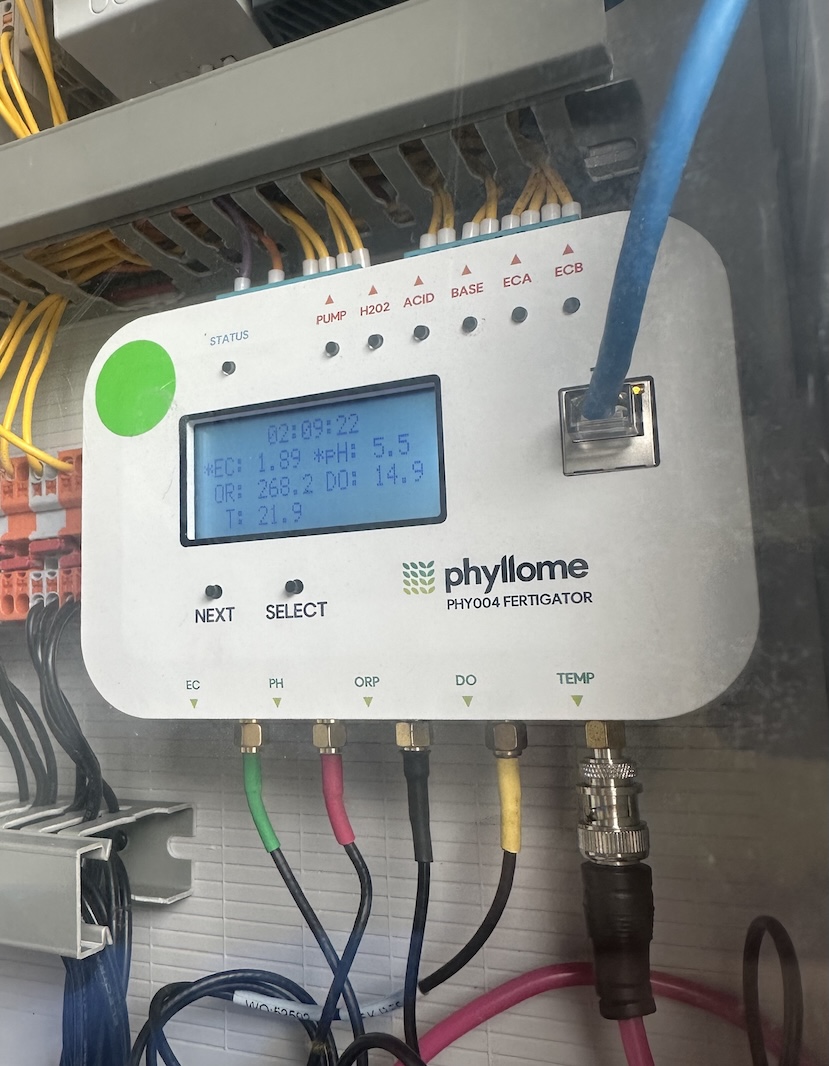
Plants are grown in a hydroponic system with nutrient solution delivered directly to the root zone. The fertigation system is fully closed-loop where water and unused nutrients are captured, sterilised, rebalanced, and recirculated. This achieves 98% water recycling compared to field agriculture, while delivering precisely the nutrient profile each variety needs at each stage of growth.
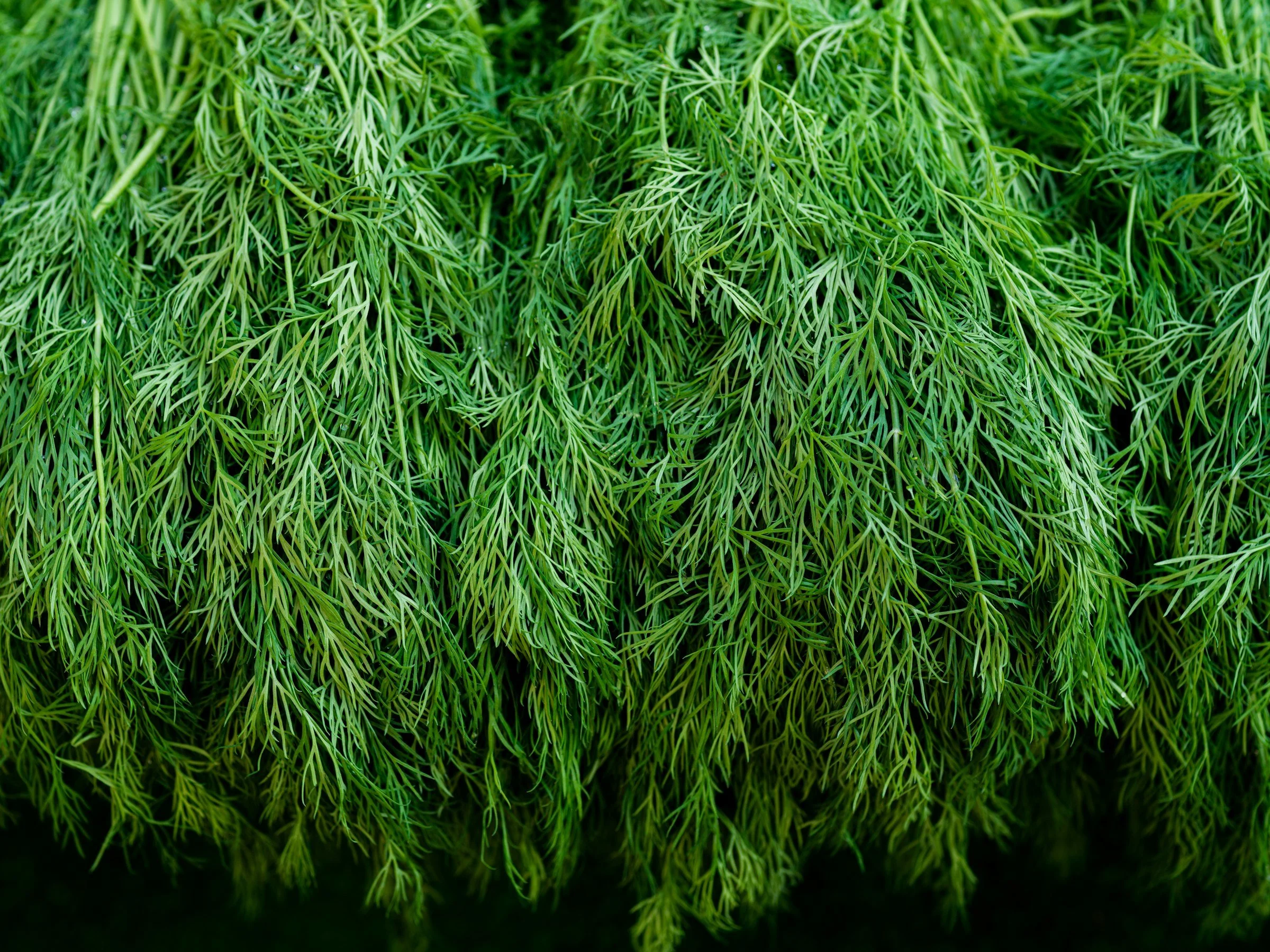
Nutrient recipes can be tuned per variety and per customer specification, enabling produce grown to specific nutritional targets. Whether the requirement is higher iron content in spinach, elevated folate in rocket, or a particular flavour profile in basil, the fertigation system can be configured to deliver it consistently across every harvest.
Powered by Phyllome AIEnergy
Phyllome's facilities are designed for energy efficiency from the ground up. LED lighting systems are tuned to deliver only the wavelengths plants use for photosynthesis and morphological development, minimising waste heat and energy consumption.
Our facilities target 100% renewable energy. Combined with zero soil-based nitrogen application (which eliminates nitrous oxide emissions, one of agriculture's most potent greenhouse gases), the total carbon footprint per kilogram of produce is 92% lower than conventionally grown equivalents, as verified by independent lifecycle assessment.
Powered by Phyllome AI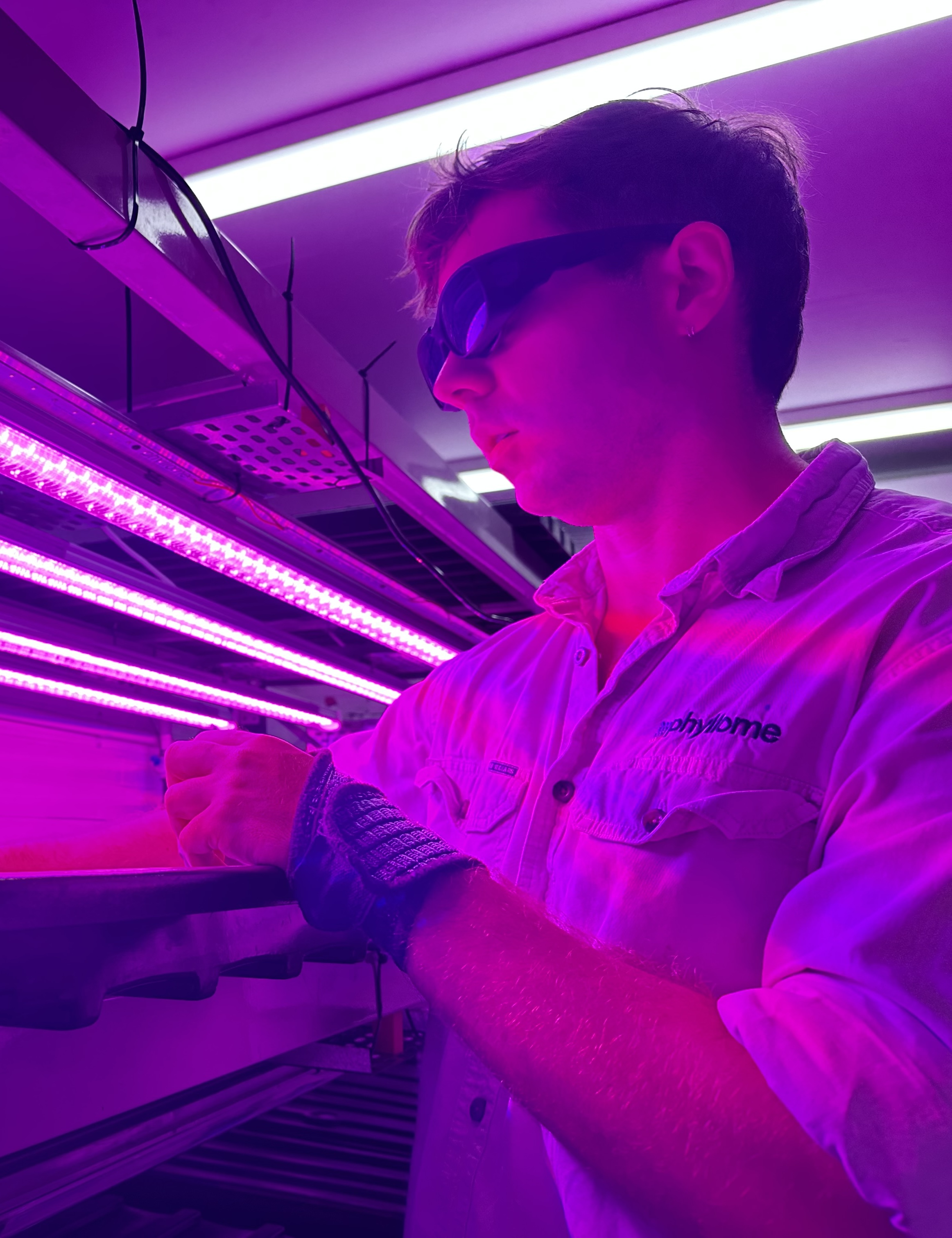
Contact us today to explore how vertically integrating your fresh produce supplier can improve your bottom line.
Contact